
Time Flies When You Are Having Fun

Greenfield Investment Management started managing investments for its first external customer in September 2021

Since then, we have steadily added other individual, family, and holding-company clients. Time has flown by.
How has it gone?
In my eyes, our most important measure of success is whether we earn good returns for our clients. A close second is whether our clients are happy with our service.
We only work with clients that are a good fit and share our values. We talk with them regularly. Based on our conversations, I am confident that our clients are happy with our service.
We are focused on the very long term and therefore four years is early to judge investment performance. That said, I am happy with our investment returns thus far. Below is the performance of our Equity Composite:

The exhibit above includes the time-weighted returns of all our clients that may have as much as 95%-100% of their portfolios invested in equities, according to their agreed Investor Policy Statements. This represents 81% of our current assets under management. The returns are after all actual fees, costs, and foreign dividend withholding taxes. Our fee schedule can be found here. All portfolios under management are fee-paying. Composite returns are calculated by asset-weighting the returns of the individual constituent portfolios. A particular client’s returns may vary somewhat from the figures above depending on their applicable fee level, the timing of cash flows into or out of their accounts, and small differences in the amount allocated to each investment. Returns are measured in Canadian dollars and the exchange rates used to convert non-Canadian holdings are the rates supplied by our custodian for each period-end date. Greenfield Investment Management does not employ leverage, derivatives or short selling, and our investment style most closely resembles value investing. Please contact us if you would like returns for our other composites. These include Balanced and Conservative, which include increasing proportions of fixed income securities. We also have an Education Savings composite, which is a shorter-term strategy. Please see further disclosures at the end of this document.
What has worked?
Where did our investment returns come from? Which investments worked out well? Three of our equity investments that contributed most significantly since our firm's inception are:
Heidelberg Materials – I followed this global cement company for many years, but only first bought the stock around the time Greenfield started managing money in September 2021. The stock had been falling when we purchased it around €65, representing about 8 times earnings. It continued to fall and in April 2022 I wrote a blog about the industry. The stock continued falling all the way to about €40 in September 2022, equating to just 5 times earnings. Since then, the stock has been on a steady climb to €222 or about 17 times earnings, making it our highest contributing investment. We trimmed the stock a few times, but it remains a large investment. I believe the company will benefit from investment in and upgrading of infrastructure around the world. New bridges, highways, dams, tunnels, airports, ports, pipes, and railways require a lot of cement.
McKesson – This is a pharmaceutical distribution company, operating mainly in the United States. I followed their industry for many years. I first bought the stock for US$144 in the spring of 2018 when many investors worried the company would be permanently damaged by liabilities stemming from the opioid crisis in the United States. We later bought the stock for US$205 when Greenfield started managing money in September 2021, representing roughly 10 times earnings. The stock has climbed steadily to US$824 today, which works out to roughly 20 times earnings. We have trimmed the position size but continue to own shares today. I see the investment similar to a royalty on Americans taking more pharmaceuticals over time.
Power Corporation of Canada – This is the holding company controlled by Montréal's Desmarais family. It holds many investments, but its largest asset is Great-West Lifeco, one of the largest insurance companies in Canada. Canadians may be more familiar with Great-West's local brand name, Canada Life. I have owned shares in this company for almost 20 years. In August 2021, I wrote a blog about conglomerates. In it, I mentioned Power Corp. and how its stock price had done very little for years, despite decent operating performance. When Greenfield started managing money in September 2021, we bought the stock for $42. The stock continued to languish for a few years, and we added to positions several times. Since August 2024, the stock moved up significantly to about $72. Despite the rise, it still trades for about 12 times earnings. Roughly 20% of our return from Power Corp. came from their dividends. We continue to own shares. I feel the company should continue to benefit from their customers in Canada, America, and Europe saving for retirement.
Which investments did not work?
Every equity investor has some disappointing investments. Thankfully, as is often the case with long-term buy-and-hold investing, our losers hurt us far less than our winners helped us. Three of our investments that detracted most from our performance since inception are:
Intel – I owned shares of this large American semiconductor microchip manufacturer previously. We then bought shares around US$55 when Greenfield started managing investments in September 2021. This price represented roughly 13 times earnings. I knew Intel was struggling with market share losses to AMD and Nvidia, but I thought the company would at least maintain their profitability, cash flows, and balance sheet strength. They are one of the few semiconductor microchip companies globally with inhouse manufacturing. I thought they would find a way to make this attribute work to their advantage, especially considering the United States government was highly motivated to avoid losing even more semiconductor microchip manufacturing to Taiwan, where their major competitor Taiwan Semiconductor Manufacturing Company is based. When we bought shares in September 2021, Intel had a relatively new CEO. Suddenly, less than two years after he joined, it became very clear to me that he was willing to decimate the company’s profitability, dividend, and balance sheet in his effort to improve the company’s competitive standing. Immediately upon this realization in January 2023, I decided to sell our shares around US$27. In retrospect my timing was far from ideal, as the stock did at one point climb back to US$50. However, I have always felt my decision to sell was the correct one. Today Intel's stock trades at US$39, representing roughly 87 times earnings.
Builders FirstSource – This is the largest supplier of building materials in the United States. They sell lumber and prefabricated products such as trusses and millwork to homebuilders, often helping the builders improve efficiency. The company has been buying up industry competitors. We bought a small amount of stock in 2024 at the price of US$149 per share. I estimated this represented approximately 12 times earnings. However, lumber prices and home building activity are cyclical, and both continued to decline from elevated levels after the COVID-19 crisis. I still like the company and the investment idea. I think the company will benefit from continued industry consolidation. The stock is currently trading at US$105 which is about 17 times earnings. I believe the company's earnings could be temporarily depressed but we have not yet bought more shares. Builders FirstSource is now one of our smallest investments.
Brenntag – This is the largest distributor of chemicals globally. When Greenfield started managing investments in September 2021, we bought shares in their competitor, Univar, which was the second largest chemicals distributor globally at the time. Univar was trading at roughly 10 times earnings. Then, in March 2023, private equity firm Apollo announced they would buy Univar, thereby taking the company private. Although we were up roughly 50% on our Univar investment, I was unhappy with the takeover, as I felt Apollo was getting Univar too cheaply, and I liked the idea of owning a large global chemicals distributor. So, after doing additional research, we sold our Univar shares in July 2023, before the closing of the takeover by Apollo in August, and rolled the sale proceeds into Brenntag shares at around €75 per share, representing roughly 12 times earnings. However, as with Builders FirstSource discussed above, the chemicals industry was coming off a COVID high, and chemicals pricing, volumes, and profit margins all continued to decline. Now Brenntag shares are trading around €49, representing roughly 13 times earnings. I still like the investment idea and the company, including their new CEO. I think their earnings could be temporarily depressed, but we have not yet added to our position.
What about going forward?
Okay, that is the past. What investments do we like for the future? Other than Intel, we still own all the companies mentioned above. Our top equity positions also include:
Ryanair – This is the largest airline in Europe. I followed the company for about 18 years. I owned its shares professionally for much of that time. We bought Ryanair's American Depository Shares when Greenfield started managing investments in September 2021 at around US$45 (adjusted for a subsequent stock split). At the time, the airline was still losing money from the COVID-19 pandemic, but it previously had consistently strong profitability. The price at the time represented only 16 times what the airline had earned back in 2018. I felt their earnings would eventually be materially higher. And, unlike many airlines, Ryanair still had an excellent balance sheet. The American Depository Shares now trade at around US$73 representing roughly 14 times earnings. I feel the airline will continue using its low-cost competitive advantage to grow by stealing market share from weaker airlines.
Jardine Matheson – As mentioned above, I wrote a blog in August 2021 about conglomerates. In it, I wrote that Jardine Matheson was one of my favourite conglomerates. It is a large and diversified family-run business focused mainly on Greater China and Southeast Asia. They have businesses in retail, real estate, engineering, mining equipment, autos, agriculture, hotels, finance, etc. I have owned the stock since 2015, and we bought it for US$51 when Greenfield started managing investments in September 2021. At the time it was trading for roughly 11 times earnings. Today it trades for $68 and trades for approximately 12 times earnings. More than a quarter of our gains from Jardine Matheson have come from dividends. I believe our investment in the company gives us well-managed diversification at an attractive valuation.
Alphabet – This is the holding company that owns Google and other smaller investments including YouTube and Waymo. In the past, I regretted not owning Alphabet's shares. After updating my research, we bought their shares when Greenfield first started managing investments in September 2021. We paid US$134 per share (adjusted for a subsequent stock split), which represented about 27 times earnings, probably the highest valuation I ever paid for any stock. After witnessing society’s behaviour during the COVID-19 pandemic, when much of our activity moved online, I believed Google and YouTube would continue to grow profits nicely over time. Back then, Artificial Intelligence was not yet a big story. The explosion of ChatGPT would be more than a year into the future. Then, as A.I. proceeded to become a huge story, Alphabet's stock price went on somewhat of a rollercoaster ride as investors strived to determine which tech companies would be A.I. winners. Today it seems Google’s A.I. platform, Gemini, could be in a good relative position versus competitors. As a result, the stock has risen to roughly US$314, representing about 29 times earnings. I feel the company should continue to grow profits over time by increasingly monetizing its many touch points impacting all our lives.
Frankly, our investment performance since our firm's inception has significantly exceeded my expectations from when we started in September 2021. I would not have guessed we would be reporting returns this high. It likely means markets have overshot somewhat. The odds are we will see a market pullback or correction given the markets' strong recent performance and high current valuations. That said, I believe there are pockets of opportunity and areas still trading at reasonable valuations, including many of our current equity holdings. For these reasons, and because timing stock market swings is next to impossible, we will likely remain close to fully invested in the near to medium terms.
How do I spend my time?
I love investing and I try to spend most of my time following and researching companies. That includes reading annual reports, analyzing financial statements, and listening to earnings results calls. But I also like to get away from my desk. I have managed to meet 50 to 70 potential investee companies each year. Some of these meetings are over Zoom or Teams, but most occur in-person via brokers organizing management roadshows or investment conferences.
Also, over the last few years, I attended five formal stock pitch events. I enjoy listening to other investors talk about their favourite investment ideas. At three of these events, I pitched stocks myself. They were Wesco, Omnicom, and Molson Coors, all of which we still own and like today.
I also regularly meet with other portfolio managers, investment analysts, and entrepreneurs. Over the last five years, I met with people from at least 50 portfolio management firms. Most are from other small entrepreneurial firms, giving me the opportunity to share best practices, learn about service providers and systems, discuss investment ideas, and consider different growth strategies. It is nice to learn directly from entrepreneurs who have built investment management firms themselves.
What else keeps me busy?
I listen to an embarrassingly large number of podcasts each year. Many of these are interviews of famous investors from all over the world. Smartphones, podcasts, YouTube, and Zoom have made it easy to surround oneself with extremely intelligent and interesting people.
I love investing and I try and spend most of my time researching companies.
Outside of investing I try to stay active meeting people. I look for opportunities to tell successful people about our firm and describe how we help clients. I spoke at an Investment Industry Association of Canada conference in June 2023. (The IIAC was recently renamed the Canadian Forum for Financial Markets). In 2025, I attended two Wilfrid Laurier University finance alumni events which led to me becoming a judge at their international case competition in October. I also attended numerous networking events and holiday parties over the years including for the Ombudsman for Banking Services and Investments and the Toronto South CPA Association, as well as formal and informal employee reunions for KPMG and Invesco.


And, somewhat amusingly, I have become a go-to presenter for Investor Relations conferences. Over the last several years I spoke at four of these conferences and was also recently a guest on a webcast for Investor Relations professionals. After my first appearance, I wrote a blog about the role of the Investor Relations function, which you can read here. In April, I attended the IR Impact Awards dinner in Toronto, a fun experience.


Starting an investment firm focused on fundamental buy-and-hold investing in public markets led to me receiving many resumes from students interested in finance. As a result, over the last several years I spoke to roughly 70 students. I was not actively seeking an equity research analyst but two of the students seemed so strong that I could not turn them away, so I agreed to take them on as volunteer equity analysts. Both students were highly engaged and already passionate about investing. Both completed large research reports including extensive valuation models which they presented to meetings of external portfolio managers at the end of their internships with Greenfield. Both students wrote blogs about their experiences which you can read here and here. Both analysts subsequently went on to land several impressive equity research positions with good firms, which makes me feel happy about the whole experience.
Through connecting with students, I was invited to attend the bi-annual York University Student Investment Fund stock presentation event this past December. I was impressed with the quality of the ideas and presentations. The three companies pitched were Ryan Specialty, Carrier, and Constellation Software.


Anything else?
This past summer I wrote an article for the Analyst, which is CFA Society Toronto’s quarterly magazine. The article describes my philosophy on foreign currency hedging in long-term global equity portfolios like ours. You can read it here:

Also, for the last several years, I have been an active member of the Accounting Standards Board’s User Advisory Committee. This committee assists the Canadian accounting standard setters in understanding how users (investors, credit granters, analysts, and rating agencies) use financial information. It also provides advice to the Board on accounting standard-setting priorities and specific projects. Joining this committee has been a wonderful way to meet many professionals I would not otherwise have met.
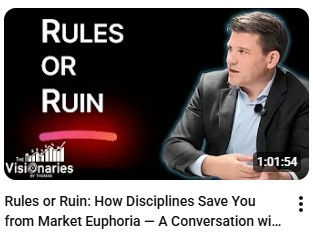
Finally, I was recently interviewed by equity analyst Thomas Shen on his YouTube channel. We discussed my background, investing philosophies, some book ideas, stock valuation, an example of a mistake, when to sell, thoughts on management, tech stocks, screening for stock ideas, a recent investment, and starting an investment firm. You can watch the full video here:
So, I think you can see, it has been an action-packed four years!
Tracy and I would like to extend a big thank-you to the brokers and service providers that have supported Greenfield Investment Management. And a massive thank-you to our clients. We are looking forward to many more years helping you grow your investments.
Until next time!
Erin
This material is for general information, illustration, and discussion purposes only. It is provided “as is” to give the reader something to think about and to illustrate our firm’s investment process and strategies. This material is not intended to convey specific investment, legal, tax, or individually tailored financial advice and it should not be relied on as such. The contents of this material should not be relied upon in substitution of the exercise of independent judgment. This material should not be considered a solicitation to buy or an offer to sell a security. Any such offer or solicitation will be made only by means of delivery of an investment management agreement, and only to suitable investors in those jurisdictions where permitted by law. This material does not consider any investor’s particular investment objectives, strategies, tax status, or investment horizon. Past performance is not indicative of future results. The comments herein are not predictive of any future investment performance. The performance of a specific managed account may vary based on the account’s specific holdings and restrictions. Details on the compilation of performance figures are available upon request. This material is based upon sources of information believed to be reliable but no warranty or representation, expressed or implied, is given as to its accuracy or completeness. All beliefs, assumptions, opinions, and estimates contained in this material constitute the judgment of the author as of the date of this publication. All opinions, estimates, information, data, and facts presented in this material are furnished as of the date shown and are subject to change and to updating without notice. They are provided in good faith however we disclaim legal liability for any errors or omissions. No representation is made with respect to their accuracy, adequacy, timeliness, or completeness, and they may not be relied upon for the purposes of entering any transaction. Certain information has been obtained from third party sources and, although believed to be reliable, the information has not been independently verified and its accuracy or completeness cannot be guaranteed. This material contains forward-looking statements, which are subject to important risks and uncertainties that could cause actual results to differ materially from current expectations. No use of the Greenfield Investment Management name or any information contained in this report may be copied or redistributed without prior written approval. Greenfield Investment Management Limited is registered as a portfolio manager with the Ontario Securities Commission. Any investment is subject to risks that include, among others, the risk of adverse or unanticipated market developments, issuer default, risk of illiquidity, and loss of capital. Our firm, directors, officers, and employees may, from time to time, hold the securities mentioned herein. Please see the Legal link in the footer of our website for more detail concerning the disclaimers listed above. We ask clients to please notify us of any changes to your contact information and to your financial situation or your investment objectives which may have an impact on the management of your assets by Greenfield Investment Management Limited.


